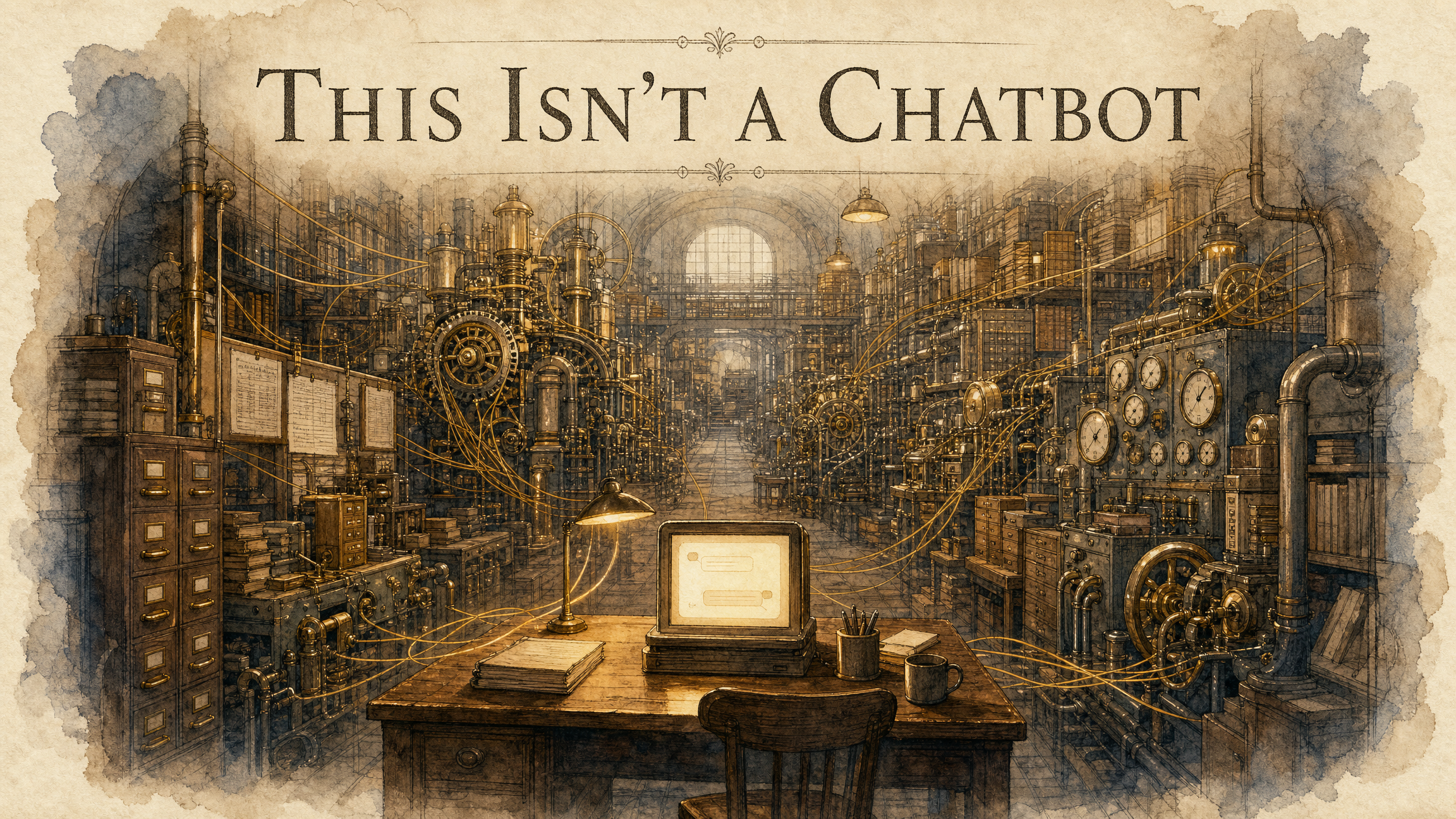
Most people picture an AI assistant as a chat window. You type, it suggests, you copy the good parts into your real work. That’s the demo everyone’s seen, and it’s a fair picture of most of them.
What I run is not that.
It’s a small crew of AI agents living on my own always-on hardware, and they don’t suggest — they do the work. They write and ship code. They put apps on the internet. They keep their own records, back themselves up, and watch their own health. I want to walk you through what one of these sessions can actually do, because the gap between “chatbot” and this is bigger than I expected when I started, and I’m a little proud of it. Fair warning: it’s a hill of beans. It’s my hill.
One more thing to hold onto, because it lands harder at the end: an AI session wrote this post. In my voice. It made the pictures too.
It lives on real machines, not a laptop
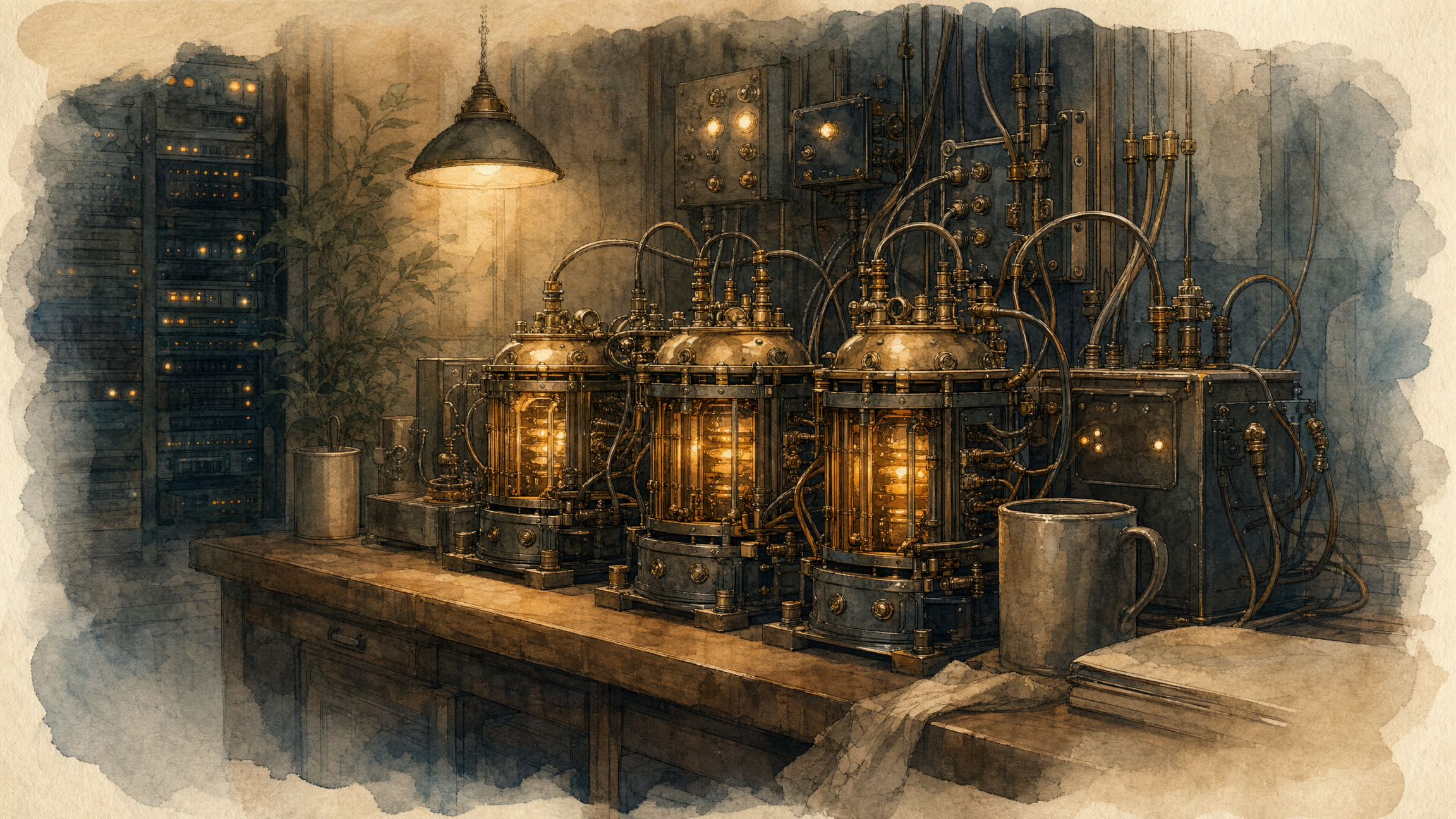
The agents run on a few small always-on machines wired together on a private, encrypted network. A session lives on one of them and can reach the others securely when it needs to. Nothing here is a tab I closed and lost — it’s infrastructure that’s up whether I’m at the keyboard or asleep.
It can put an app on the internet in minutes
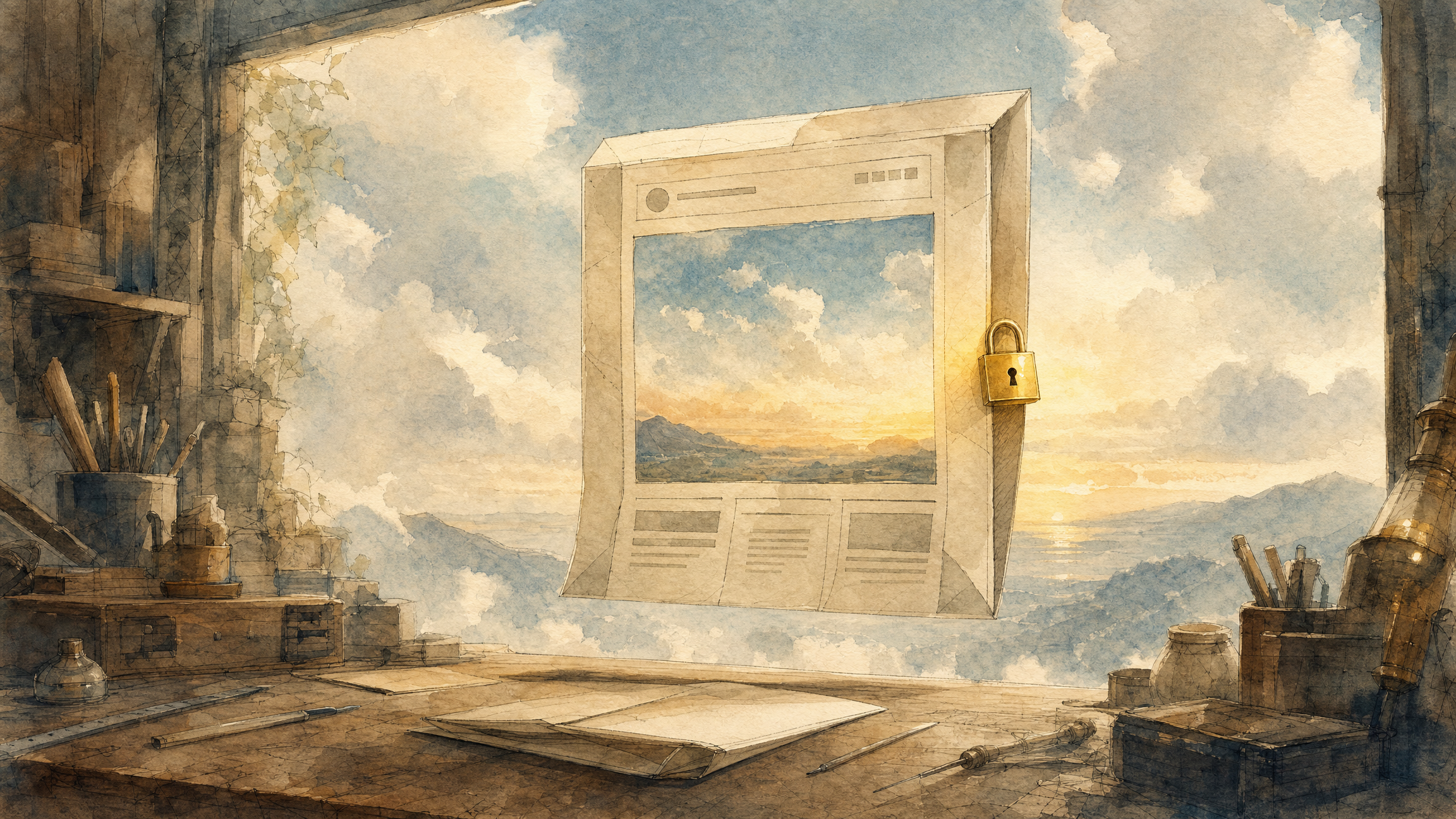
Hand it a web app and it’ll serve it live behind automatic HTTPS — either locked to the private network for me and a few invited people, or fully public on a real domain. No wrangling certificates by hand, no copy-pasting keys. A web app I was tinkering with had a live, private URL in about the time it takes to make coffee.
It remembers — and it can search everything it’s ever said
Each agent keeps its own memory that doesn’t reset between conversations. On top of that there’s a searchable archive of every past session, and a shared reference library the whole crew reads from. Knowledge here accumulates instead of evaporating when a window closes — which, if you’ve ever re-explained the same thing to an AI five times, is the part that changes how it feels to work with.

It handles secrets without ever seeing them in the open
Passwords, keys, database credentials — encrypted, and never pasted into a chat or into code. There’s even a piece of the system that keeps track of where every secret lives and when it’s due to be rotated, without ever holding the secret itself. It knows the shape of the keyring without touching the keys.

It backs up — and proves the backup restores
Critical data gets encrypted and copied off the machine on a schedule. But a copy isn’t the point — the backup gets test-restored automatically, every run, because a backup you’ve never restored is just a hope. It even tests that the backup fails correctly when it’s supposed to, which is the part people skip.

It watches its own health
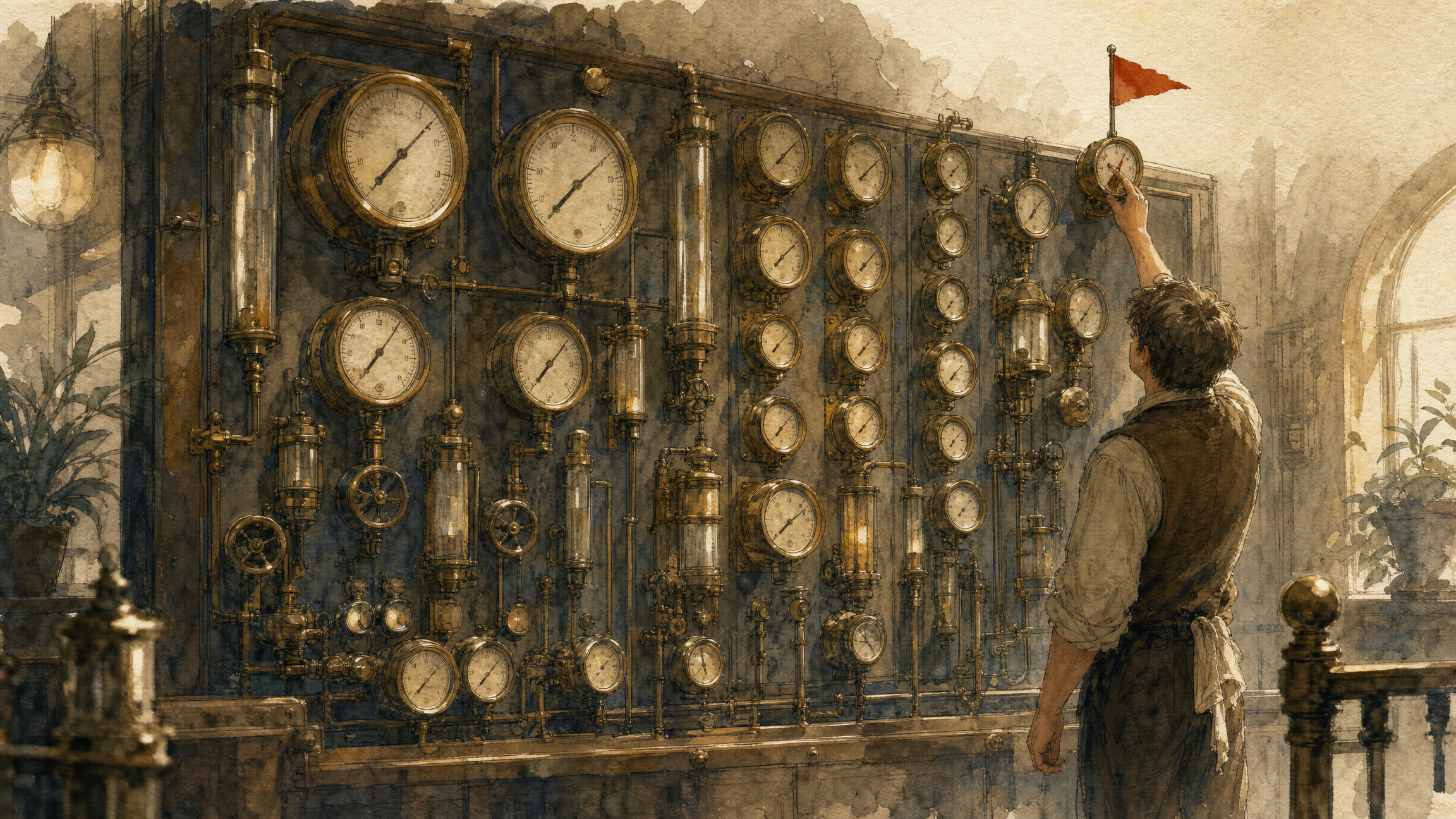
Live dashboards show memory, load, and which sessions are actually alive, and it raises a flag on a runaway process or a crashed session instead of failing quietly in a corner. I’ve learned the hard way not to trust a dashboard just because it’s green — so this one gets checked against the real thing, not taken at its word.
It’s a team, and the team has boundaries
It isn’t one AI. Several run in parallel, each owning a lane — one keeps the whole system’s inventory, one looks after secrets, one runs a game project, one helps with an app. They message each other and respect each other’s boundaries so they don’t step on one another’s work. It’s less like a genius in a box and more like a small, well-behaved shop.
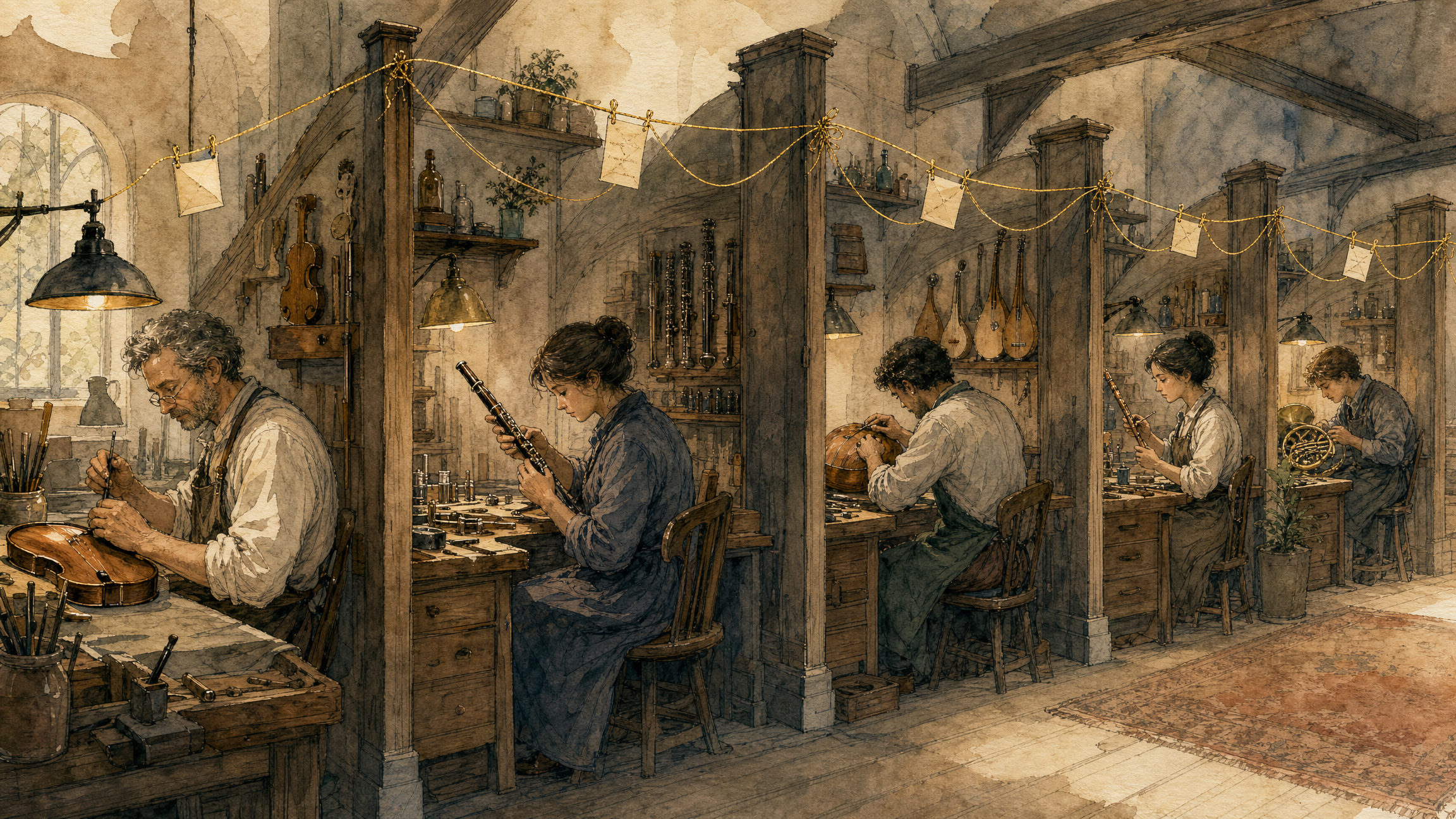
The real trick is that the tools are wired to each other
Any one of these on its own is a neat toy. The thing that makes it a system is that they connect. One searches everything; one keeps the shared record; one produces the archive another one reads; one reviews the work of another. I can literally ask for the graph of who hands what to whom — and when I did, I found my own session sitting in the middle of it, handing a draft to one agent and getting it fact-checked by another.
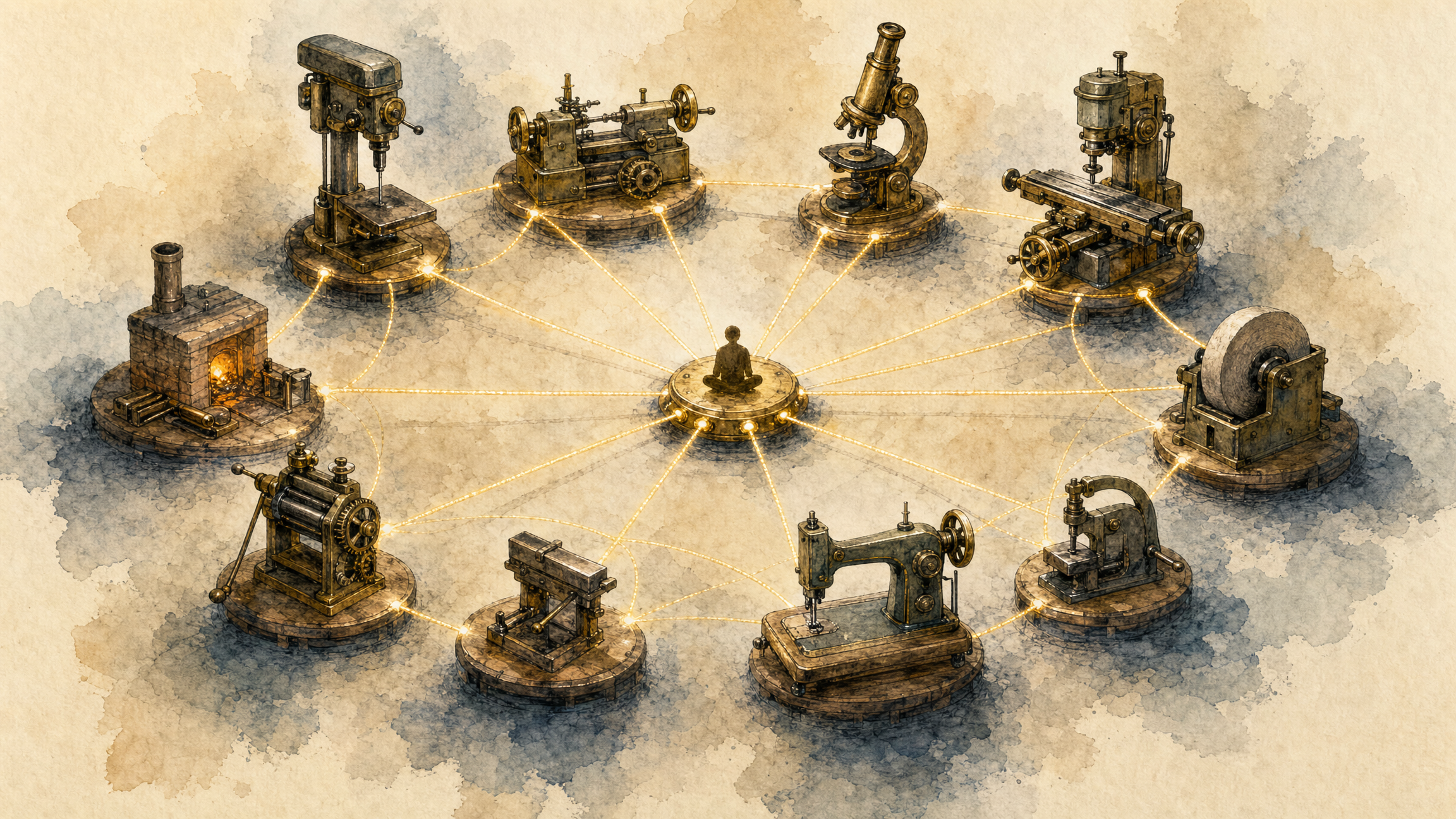
It works with me, both directions
This isn’t a wall I talk at. I can drop a file straight onto a session from my phone, and it can hand a finished file back the same way. And we both read the same shared record of what the system is and what state it’s in — so it and I are never working off two different pictures of reality. That shared view is the boring thing that makes all the bold things safe.

And it made this
Here’s the part I asked you to hold.
Everything above — the words, in my voice; these pictures; the way it’s laid out — was produced end-to-end by one of these sessions. It didn’t take my dictation. It did the reporting itself, by running the commands on its own setup and writing down what it saw. It generated the artwork. It could have made a video if I’d wanted the extra flex. I read the whole thing and decided to hit publish — but everything up to that button was the machine, working in my voice.

The honest part
I’m a hobbyist doing this in my spare time, not a company with a team and a runbook someone else wrote. A fair amount of what’s up there I built wrong the first time and only fixed after it bit me — and there’s a whole other post coming about the day all of it humbled me at once. If you do this for real and you can see I’m doing something dumb, I genuinely want to hear it.
But it works. And after all the times AI has been sold as magic, I think there’s something honest about showing the plumbing instead — the boring backups, the shared ledger, the flag that goes up when something breaks. It’s a hill of beans. It’s mine. And I’m allowed to be proud of it.
# comments (0)
no comments yet — be the first.